
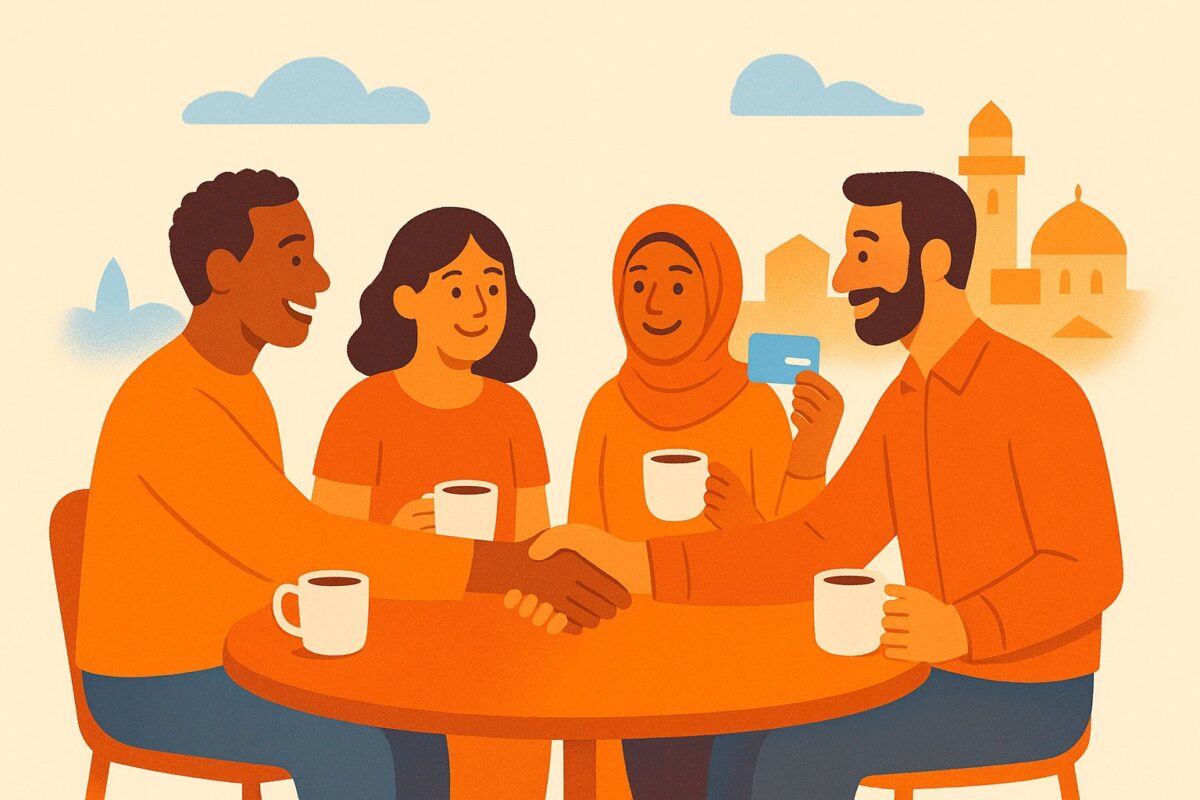
The first months in a new country feel a bit like moving into an apartment before the furniture is in place. Things are getting done, but it doesn’t feel like home yet. The paperwork gets sorted over time and your Hebrew slowly improves, yet there’s still nobody you can simply sit with in comfortable silence, or talk to about what matters to you without translating or explaining yourself.
Is it normal to feel lonely after moving to Israel?
Yes. When your address changed, so did your social circle. The old one stayed behind in another country and another time zone, and your new contacts are mostly coworkers, clerks at government offices and roommates in a rented apartment. Nothing is wrong with you, and your personality has nothing to do with it: every move works this way.
It helps to read loneliness at this stage as a signal that it’s time to build connections again. That’s a solvable problem. Russian-speaking Israel has plenty of people who went through exactly the same thing, and they live close by.
Why don’t group chats turn into friendships?
Chats and groups are great for everyday logistics: where to find a kindergarten, where to take your documents, which bank won’t keep you waiting in line for ages. But information and closeness are two different things. You can scroll through messages for months and still have no one to text “want to grab a coffee?” in the evening.
Likes alone won’t help you make friends in Israel. You need live meetups that happen again and again. Friendships almost always start where you keep seeing the same people and gradually get to know their faces, their jokes and their habits. A social media feed flashes hundreds of people past you, and that never happens with any of them.
What a live meetup gives you
- The same faces: the acquaintance carries over from one meetup to the next instead of fizzling out after a couple of messages.
- Shared context: you’re already in the same room, there for the same interest, so nobody has to explain who they are and why they came.
- Shared experience: an evening like that stays with you longer than any chat thread and brings people closer faster than words.
Why closed communities work better than open chats
On Tusovka, Russian-speaking communities in Israel are set up as closed interest communities. Each one has a leader and its own circle of members, and the topic can be almost anything: board games, running, languages, family and kids, tech. Keeping them closed is about peace of mind: people get in because the leader invited them for a specific interest.
That’s why joining by invitation feels calmer than posting in a group chat with hundreds of people. You know in advance who runs the community, and the first message comes more easily: you can reach the leader with the “Message the leader” button on the community page, and everyone else in the chat of a meetup you’ve signed up for.
How do you join a closed community?
You join with a physical member card that carries a code in the XXXX-XXXX format. Only the community leader hands these out, either in person at a meetup or by mail. The card is your invitation.
No card yet? Open the community page and click “No card? Ask a community leader”. You’ll need an account on the site for that. The leader reviews your request, and once it’s approved, you choose in your account how to get the card: by mail or at a meetup.
Anyone can sign up on the site, and the meetup feed and community pages are visible even without logging in. A card gives you something else: membership in one community, the one it was issued for. Once you activate it, you can see the full member list and sign up for the community’s meetups, and a digital card with a QR code appears in your account.
How to activate your card, step by step
- Get your card from the community leader, at a meetup or by mail.
- Open the card activation page, or point your phone camera at the QR code on the card and the code fills in by itself.
- If it doesn’t, type the code in by hand: the hyphen is already there, and upper or lower case doesn’t matter.
- Log in or create an account on the same page: name, email, date of birth and password. The card links to your account automatically.
- That’s it, you’re a member of the community: browse the member list and sign up for its meetups.
How to go to your first meetup without the stress
Newcomers trying to meet people tend to get stuck at the same point: making the first move feels scary. So for your first meetup, pick a format that suits you, such as a conversation meetup, a walk or board games. When everyone has something to do, silence isn’t awkward, because your hands and attention are busy.
Open a meetup in the meetup feed: its page has a “Going” button. If all the spots are taken, you’ll see “Join the waitlist” instead. When a spot opens up, you’re moved to the list of people going automatically and get an email, so joining the waitlist is worth it even when everything looks booked.
It’s perfectly fine to come to your first meetup as an observer. Nobody expects you to be the life of the party right away. Just being there is enough, and the conversations will get easier each time.
Start in your own city
Meetups take place in different cities across Israel. Every community and every meetup lists its city, and both the community catalog and the meetup feed have a city filter. It makes sense to start where you live: less travel, and a better chance that meeting someone at a meetup turns into regular get-togethers close to home.
If there’s no community for your interest nearby yet, put a meetup together yourself: the “Create plan” button is right in the meetup feed. Anyone who is 18 or older and has a confirmed email can create a light plan, which is set for three people by default, you included.
You can read how the platform works and what principles it stands on in the About section. When you’re ready, pick a community for your interest or a meetup close to home and go to your first one.